

Metal in the brain is bad right? Not always. In fact, there are some metals that our brain naturally has in it. These are called endogenous metals. There are some that are in significant amounts like iron, zinc, and magnesium. Others are present in trace amounts like cobalt, selenium, and lithium.
That last one, lithium, is the star of our show today. Because there is new research out of Harvard that shows the incredibly important role that lithium plays in the functioning and health of our brains. If this research leads to treatments in humans, we may be looking at our first true treatment for Alzheimer’s disease.
The article is titled Lithium deficiency and the onset of Alzheimer’s disease, published in the peer reviewed journal, Nature on August 6, 2025. The article itself is very dense, especially if you don’t have a background in neurobiology, so here is the TL;DR:
Researchers out of Harvard Medical School, Rush Alzheimer’s Disease Center, and Boston Children’s Hospital sought to understand the role of Lithium brains that were normally aging, had mild cognitive impairment (MCI), or that had Alzheimer’s disease (AD) and found:
People with MCI and AD had significantly reduced levels of lithium in parts of the brain impacted by AD.
Lithium was highly concentrated in amyloid plaques (a key feature of AD) and reduced in other areas of the brain, suggesting that amyloid plaques bind up lithium and reduce its availability elsewhere in the brain.
Decreased lithium in non-plaque areas of the brain correlated with poorer cognitive performance for normal and AD subjects, indicating that lithium is essential for cognitive function.
Through a series of experiments using genetically modified mice, they strongly confirmed the binding of lithium in amyloid plaques and the reduction of lithium in other regions of the brain. They also saw the same change in cognitive performance as was observed in the human subjects.
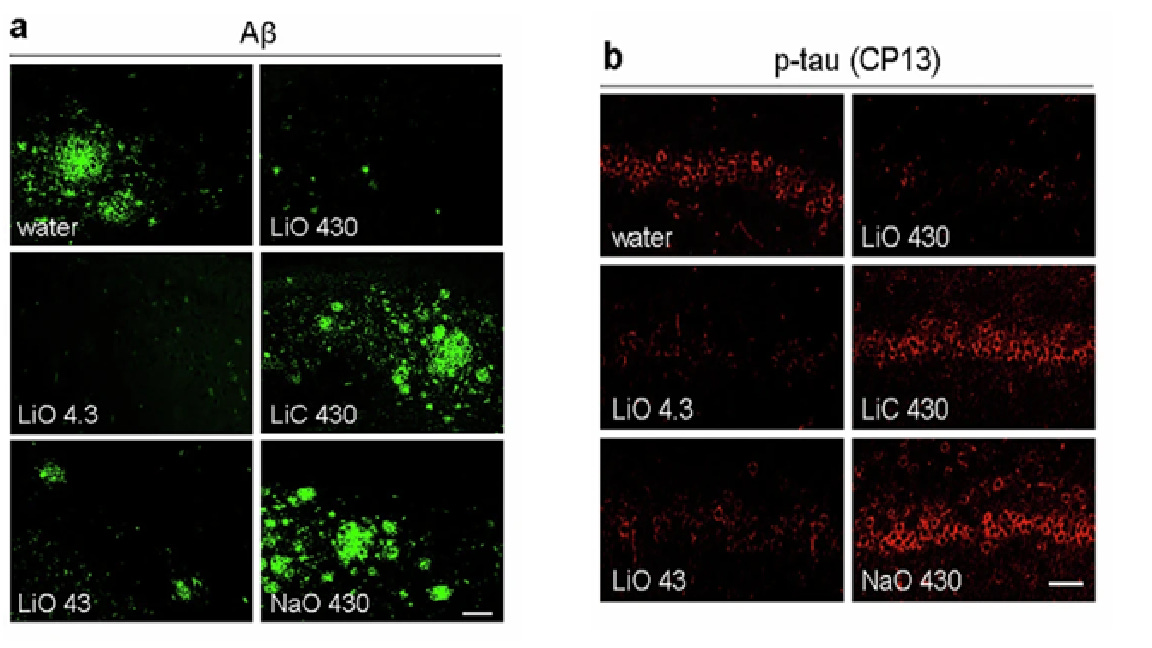
By reducing lithium levels through modifying the mice’s diets, they were able to elevate amyloid and tau (key in AD development) and reduce cognitive performance.
They discovered that lithium carbonate (the type prescribed for bipolar disorder) tends to bind heavily to amyloid, whereas lithium orotate did not.
By administering lithium orotate to mice, they were able to prevent build up of amyloid plaque, increase lithium levels in non-plaque parts of the brain, and reduce the amount of amyloid plaque already present in the brain.
Administering lithium orotate to mice also effectively reversed the memory loss caused by amyloid buildup.
Together, this shows that lithium plays a vital role in brain aging and cognitive performance. Low doses of lithium orotate (not the kind prescribed for psychiatric disorders) can preserve cognitive function, reduce inflammation, and suppress amyloid buildup in mice. This has HUGE implications for potential research on treating humans with Alzheimer’s pathology using lithium orotate.
Background on Alzheimer’s Disease
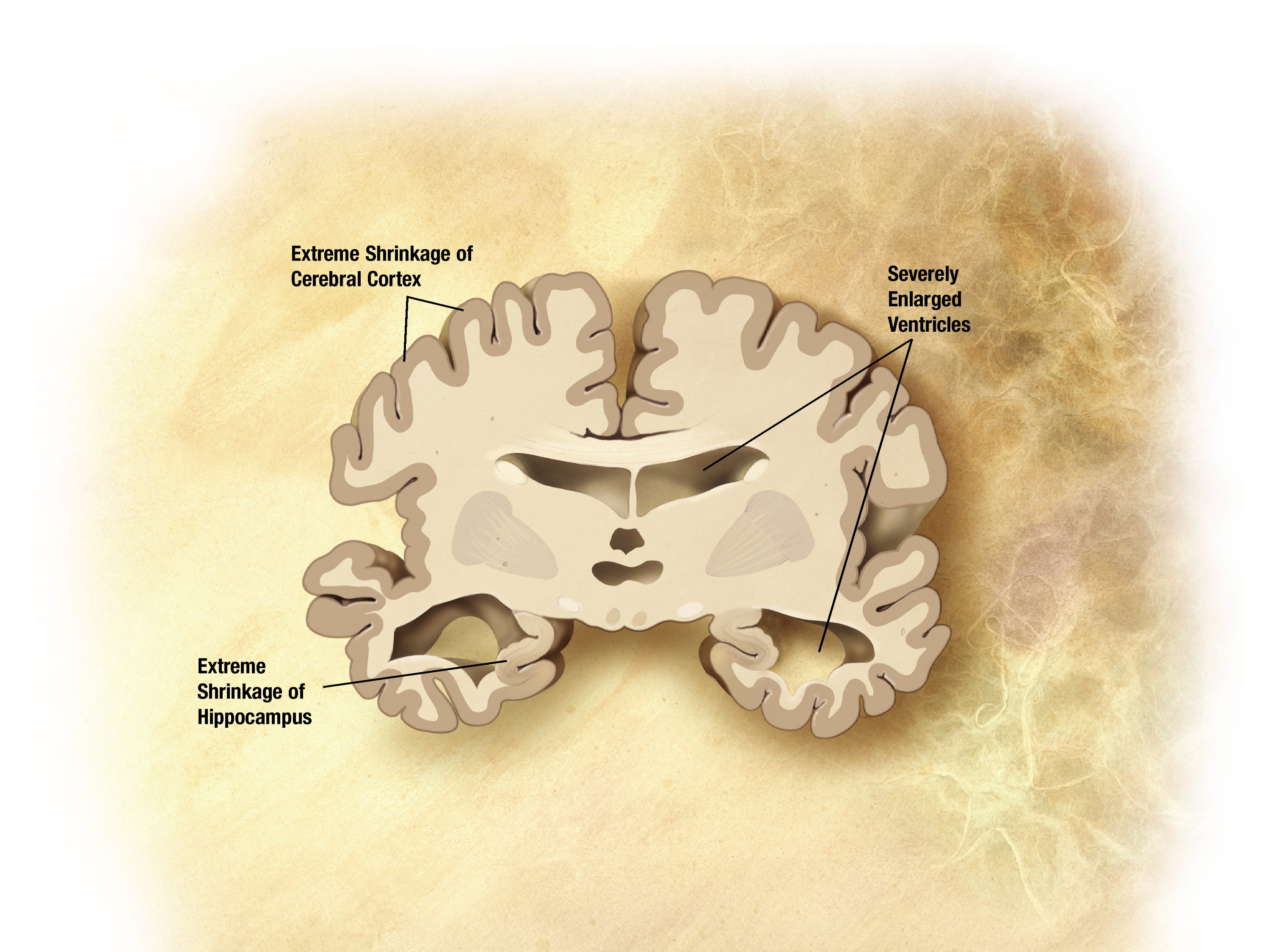
Alzheimer’s disease (AD) is a neurodegenerative condition, meaning it literally breaks down the cells in your brain. It is progressive in nature and inevitably ends with someone getting dementia (impairment so bad they can’t live independently) from it. Alzheimer’s typically starts with mild short-term memory loss, like forgetting where you put your keys or what you had for breakfast. From there, the impairment increases to more pronounced memory difficulties and often trouble with language. For example, someone with AD may have difficulty remembering what items are called or the name of their favorite restaurant. As the disease progresses, it essentially impacts the whole brain, leading to behavioral changes, loss of personal memories (like names of family members), and even difficulty with simple tasks like dressing or bathing.
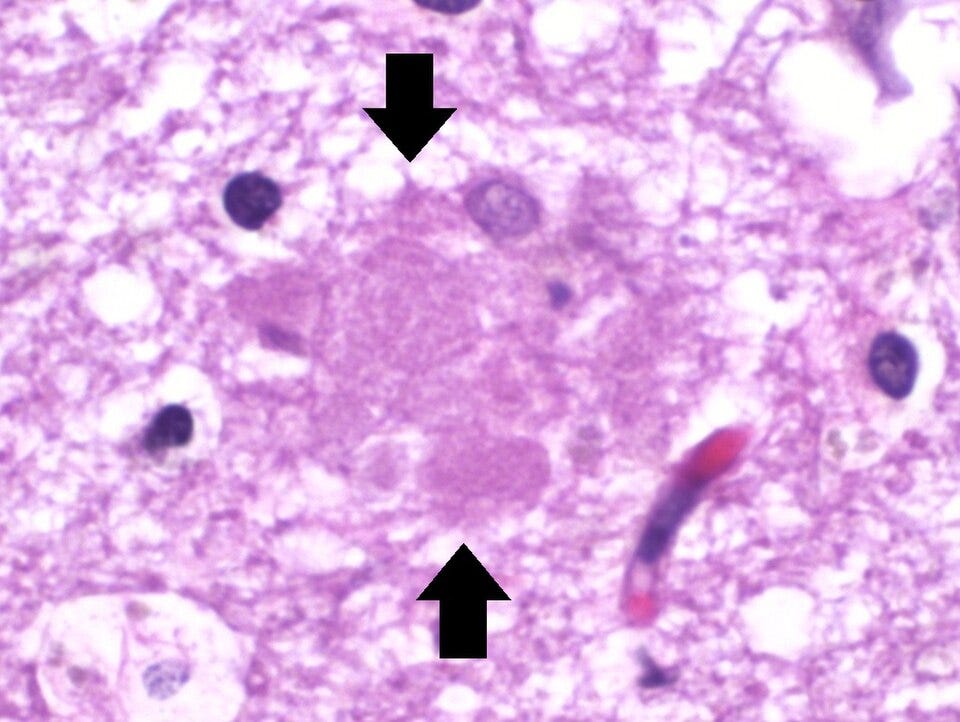
We don’t know exactly what causes Alzheimer’s disease. What we do know is that it seems to cause a few hallmark changes in the brain. One of the biggest culprits is the buildup of abnormal proteins. There are sticky clumps of protein called beta-amyloid that collect between neurons, which cause “plaques.” Inside the neurons themselves, there is a protein called tau that starts to twist into (neurofibrillary) tangles that interrupt the flow of nutrients within neurons. Together, these plaques and tangles cause these important cells in the brain to die out, which shrinks the size of important structures like the hippocampus, which is largely responsible for memory functioning.
In addition to that, there is also evidence that AD causes inflammation and changes to how the brain uses energy. The immune system within the brain seems to go into overdrive with AD, damaging healthy brain tissue while trying to fight off the abnormal proteins we talked about.
Basically, Alzheimer’s disease creates a kind of perfect storm of issues in the brain that slowly causes someone to deteriorate and eventually die from complications, often within a decade. Researchers have made huge strides in understanding what’s happening in the brain with AD, but the trigger that sets the cascade in motion is still up for debate. And so far, we have not found any truly effective treatments.
Background on Lithium

Lithium is a naturally occurring mineral (alkali metal), that has been used for many years in psychiatry as a mood stabilizer, commonly in individuals with bipolar disorder. The discovery of lithium is actually pretty fascinating.
As early as the 1800s, doctors began to notice that certain areas with naturally lithium-rich mineral waters had lower reported rates of psychiatric hospitalization and suicide. Doctors ran with this correlation and began adding lithium to things like tonics and even the popular soda 7-Up. In 1949, a Australian psychiatrist, John Cade, dissolved uric acid in lithium salts to experiment on (literal) guinea pigs and noticed that the lithium itself made them calmer. He then tried lithium carbonate on patients with mania and saw dramatic improvements in their symptoms.
Lithium is scary in concept because it can be very toxic at high doses, but throughout the 1960s and 70s, research continued, and it became the first true mood stabilizer on the market. We now have many different options for stabilizing mood, including atypical antipsychotics like quetiapine, but lithium carbonate continues to be an effective treatment for many people with bipolar and related disorders.
History Repeats Itself
Funny enough, the whole “there must be something in the water,” impact of lithium continues in modern times.
In 2017, researchers from Denmark found an inverse correlation between the levels of lithium in drinking water and the incidence of dementia. The study was not perfect, as it was an observational population-level study with various potential confounding factors.
But again, we see a situation where lithium incidentally being in drinking water seems to cause a positive health outcome. This along with some other preliminary research showing the impact of lithium on cognitive abilities led the researchers from the 2025 Harvard study to dig deeper.
A Beautiful Series of Experiments
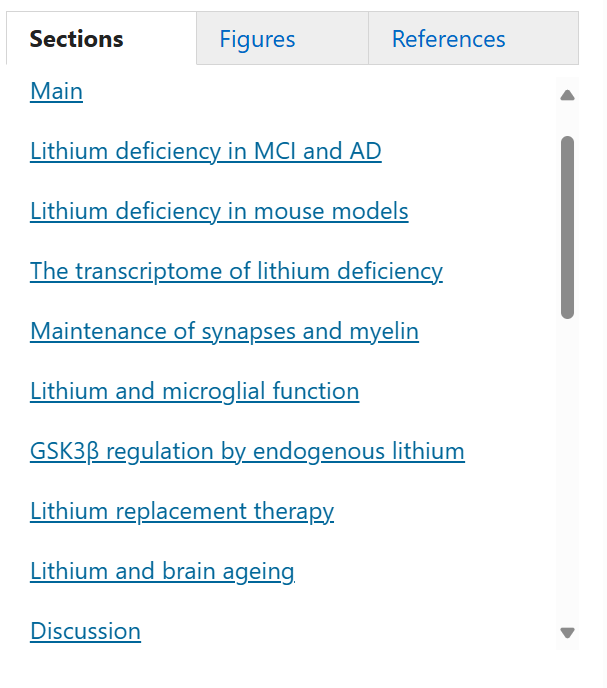
It’s not often that I am drawn into a scientific peer-reviewed paper like it’s a fiction book, but man this one got me. Rather than one single experiment, the authors carried out a series of studies and lab experiments to explore and investigate their hypotheses. This may sound nerdy, but I just found their study design to be so elegant. It’s a lot to digest, though as you can see from the table of contents for their paper, so I will do my best to summarize the most important parts.
Lithium Deficiency in MCI and AD
The researchers hypothesized that there would be differences in the endogenous (existing naturally within the body) lithium levels between normally aging people and those with AD or mild cognitive impairment (MCI).
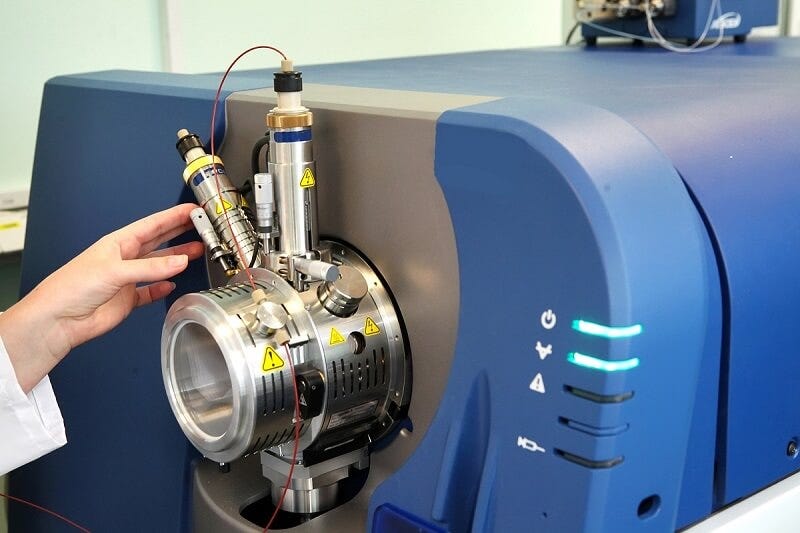
They used inductively coupled mass spectrometry (ICP-MS), which is a lab technique used to detect tiny amounts of metals in a sample. It uses super-hot plasma to break the sample into charged particles, then the mass spectrometer separates and identifies the particles based on mass. This lets scientists measure elements at extremely low concentrations like parts per billion.
Using this technique, they looked at lithium levels in the prefrontal cortex, which is typically impacted by AD and the cerebellum, which is much less impacted by AD. They looked at all of the trace metals in these parts of the brain, and only lithium showed significantly reduced level in the prefrontal cortex but not the cerebellum in people with AD or MCI. This means that the development of Alzheimer’s disease seems to mess with the natural levels of lithium in the brain.
As if using super-hot plasma was not enough, they took it a step further and used lasers in a process called laser absorption inductively coupled plasma mass spectrometry (LA-ICP-MS). This lets them analyze tiny spots of solid material without having to dissolve the sample first. This gives very fine detail, almost like creating a chemical map of the brain.
With this more detailed technique, the researchers then looked at the effect of AD pathology (plaques and tangles) impacted the balance of lithium in the brain. They found that there was a significant amount of lithium bound up in the amyloid plaques and a reduced amount of lithium in other regions of the brain that didn’t have plaque. This is a huge finding. It suggests that the amyloid plaques effectively rob the other parts of the brain of its lithium.
A very interesting finding, but what is the practical impact of reduced lithium outside of the plaque-heavy regions? Well, they looked at that too. Lower levels of lithium in the regions of the brain that were not heavy in amyloid plaque led to reduced cognitive testing scores for episodic memory and semantic memory, which are commonly impacted in dementia conditions like Alzheimer’s disease.
The Mice Experiments

The human part of their studies were very interesting, but it’s hard to make conclusions without running true experiments. This is where animal models come in. We can’t exactly give a human Alzheimer’s disease to then test their brains. For better or worse, we can do that with mice. In this study, they used transgenic mice (not transgender mice like Trump thought 🙄), which are mice that have human DNA inserted so that we can use them as a proxy for humans.
For mice that were made to have widespread beta-amyloid in their brain, the researcher found 3-4x higher concentrations of lithium in the regions of the brain with amyloid deposits compared to the non-plaque regions, effectively replicating what was observed in humans. This effect was dependent on age, though. The high concentration of lithium in the amyloid deposits was only present in 12-month-old mice. For the same type of mice, but only at 3 months old, which is before they start to develop significant amyloid build up, their concentration of lithium was about the same as wild-type mice. This indicates that lithium is indeed tied up by amyloid deposits, which makes it less available to the rest of the brain.
Next, they looked at what happens when you remove lithium from the diets of these mice. Again, this gets pretty complex, but they basically made mice that had Alzheimer’s pathology in the form of amyloid (as discussed in the paragraph above), mice that had Alzheimer’s pathology in the form of tau (leading to tangles), and wild-type mice with no pathology. After removing lithium from their diets, they found significant increases in beta-amyloid deposits in the hippocampus (memory center) for both AD and wild-type mice. They also found increased tau tangles in the hippocampi of the tau-driven mice. This means that the intentional reduction of lithium in the diet of these human-analogue mice increased the brain issues associated with Alzheimer’s disease.
After confirming these neurobiological changes, they also tested the cognitive abilities of the mice using a specialized test called the Morris water maze, which measures learning and memory in rodents. The results of this rodent cognitive test mirrored those of the human cognitive tests described above. The lithium-deficient mice had reduced learning and memory. This suggests that the normal balance of lithium in the brain protects against memory loss in both normally aging mice and those with Alzheimer’s pathology.
They also did some wildly complex stuff looking at the complete sets of RNA and proteins in the mice (transcriptome and proteome) to see the impact of lithium. It’s too much to go into the details here, but they found that lithium was involved in many processes that impact the normal healthy functioning of the brain.
Discovering a Treatment
Since they showed that reducing lithium can cause increases in Alzheimer’s pathology and decreases in cognitive ability, the next step was to determine if there is a way to supplement lithium. Seems simple enough, but how can that work when all the lithium gets bound up by the amyloid plaques?
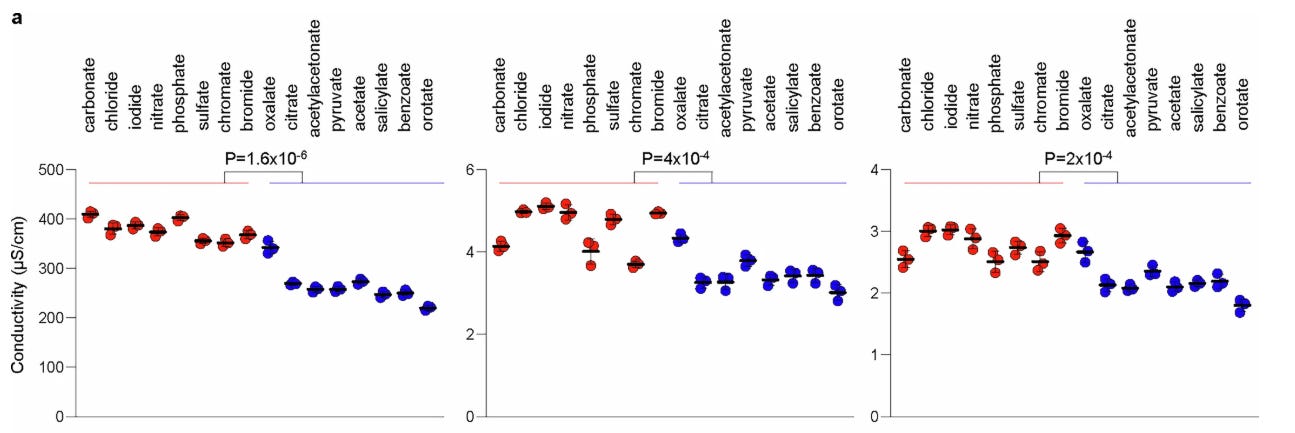
The researchers had the hypothesis that it was the electrostatic interaction of the lithium ion and beta-amyloid deposits that caused them to bind together so much. Further, if they could find a lithium salt with lower ionization, maybe it wouldn’t be as impacted by the presence of amyloid, and it could therefore be more available in other regions of the brain.
The tested the conductivity of 16 different lithium salts. Interestingly, lithium carbonate, which is the type used as a medication for bipolar, had significantly high conductivity (indicating increased ionization). Of the other lithium salts, lithium orotate had the lowest conductance, so it was chosen as the other lithium salt use as a comparison to lithium carbonate. So, we have lithium carbonate (LiC), which is typical therapeutic lithium and lithium orotate (LiO), which is a lower conductivity version of lithium.
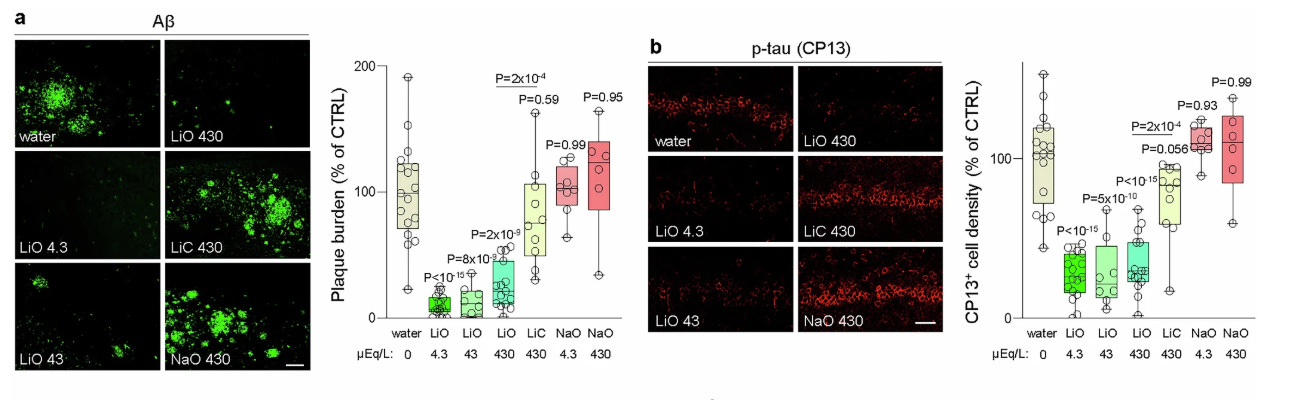
They administered LiC and LiO to the mice in drinking water, and the results were amazing. Lithium in general was elevated within the amyloid plaques for both groups, which is not surprising. But for the LiO group only, lithium was also elevated in the other areas of the brain, not taken over by amyloid plaque. When they increased the dose of LiO to a higher level, it almost completely prevented plaque and tangle accumulation, whereas administering LiC or simply sodium orotate (as a control) had no significant effect in reducing plaque or tangle formation.
Even more impressive, they looked at whether supplementing with LiO could reverse pathology in aged mice. For mice with abundant and widespread beta-amyloid deposition, LiO reduced the burden of plaque by about 70% That’s absolutely wild. The effect was also present for cognitive performance. Among mice that had memory loss compared to wild-type mice, the lowest dose of LiO almost completely reversed memory loss according to cognitive testing. It also improved learning and spatial memory in mice with advanced amyloid pathology. As if that wasn’t enough, it also prevented structural changes and inflammatory changes that are known to contribute to Alzheimer’s disease. The cherry on top is that there was no evidence of toxicity from supplementing with lithium orotate.
Implications
I’m trying not to get too excited about these findings. Given my background as a neuropsychologist, I am obviously eager to find an effective treatment or preventative measure for Alzheimer’s disease. Transgenic mice are not humans, and we don’t yet know the impact of using supplementary lithium orotate in humans with Alzheimer’s disease and related pathology. But if the eventual human trials are anything like the results we see here… that will be groundbreaking.
Here’s what we know from this study:
-
Lithium in the brain plays an essential role in cognitive functioning, and when it is reduced, it leads to impaired cognitive abilities.
-
Beta-amyloid plaques steal lithium from other parts of the brain that need it.
-
Lithium carbonate is more attracted to beta-amyloid plaques than other lithium salts like lithium orotate.
-
In mice, supplementing with lithium orotate can improve cognitive function and reduce the impact of Alzheimer’s pathology.
While the authors caution against over-extrapolating these results, in the process of preparing this article, I came across various subreddits that have discussed the use of lithium orotate for cognitive supplementation for years. Do not engage in any supplementation without the advice of your doctor, but it’s interesting to know that science and personal experience may be converging here.
